Teletubbies Case
About this case
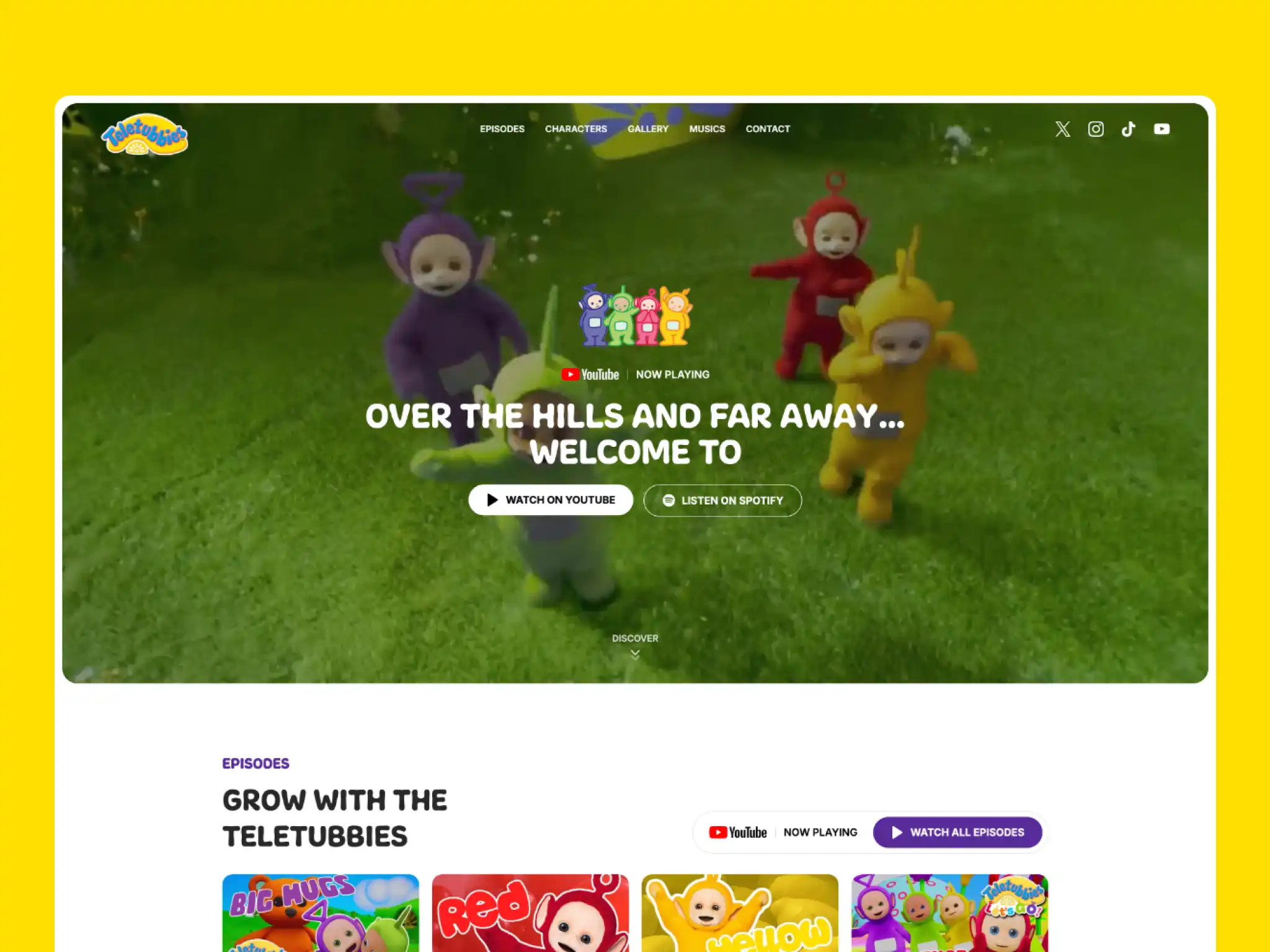
As a child, Teletubbies was one of my favorite TV shows and a big part of my early memories. For this case study, I reimagined its website with a modern design approach while preserving the playful and colorful spirit that made it so memorable. Rather than simply recreating the original, I redesigned the experience with contemporary UI principles, responsive layouts, smooth animations, and improved accessibility. The goal was to demonstrate how a nostalgic brand can be transformed into a vibrant, engaging, and user-friendly digital experience without losing its original identity.
Project Architecture
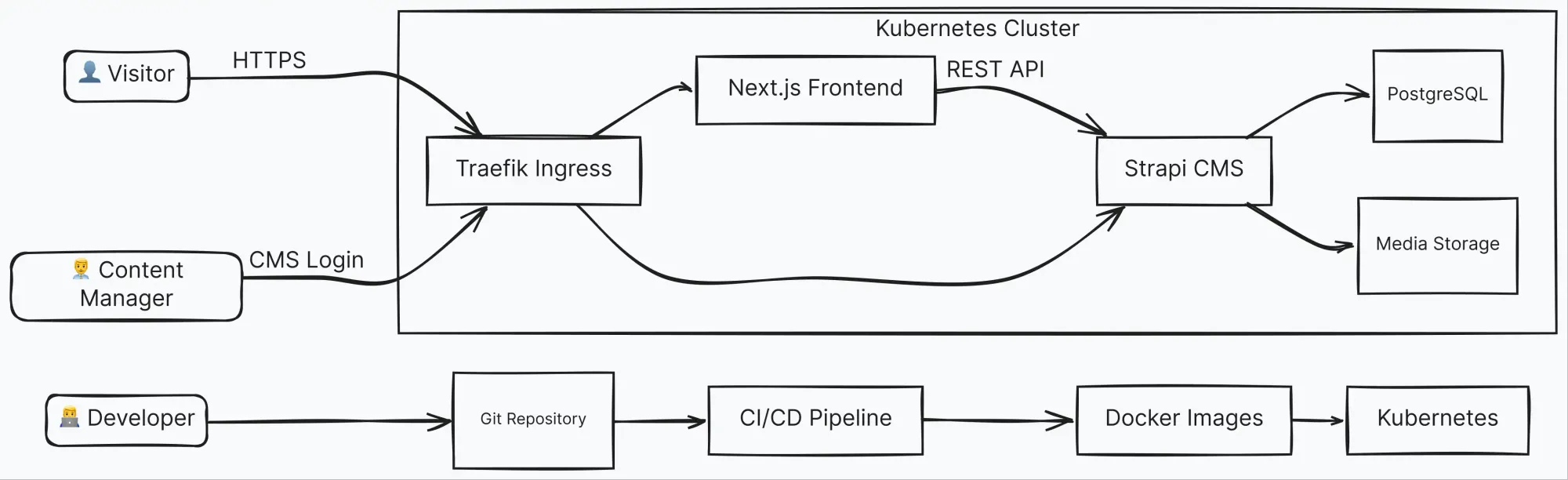
This project was built using a modern, scalable, and cloud-native architecture. The frontend was developed with Next.js, providing high performance, server-side rendering (SSR), static site generation (SSG), and excellent SEO capabilities.
Content management is powered by Strapi Headless CMS, enabling pages, blog posts, and other dynamic content to be managed through an intuitive administrative interface. By adopting a headless CMS architecture, the content layer is completely decoupled from the presentation layer, making the application easier to maintain, more flexible, and ready to support additional platforms in the future.
The application is containerized using Docker Compose, where the Next.js frontend, Strapi CMS, and PostgreSQL database run as isolated services within a single stack. This approach ensures consistent development and production environments while simplifying deployment and maintenance.
To efficiently manage incoming traffic, Traefik is used as the reverse proxy and ingress controller. It automatically discovers services, handles dynamic routing, manages SSL/TLS certificates, and enables secure communication between application components with minimal configuration.
The infrastructure is designed with Kubernetes in mind, allowing the application to scale horizontally, recover automatically from failures, and support rolling updates with minimal downtime. By combining containerization, Traefik, and Kubernetes orchestration, the project provides a highly available, resilient, and production-ready deployment architecture.
Project Diagram